
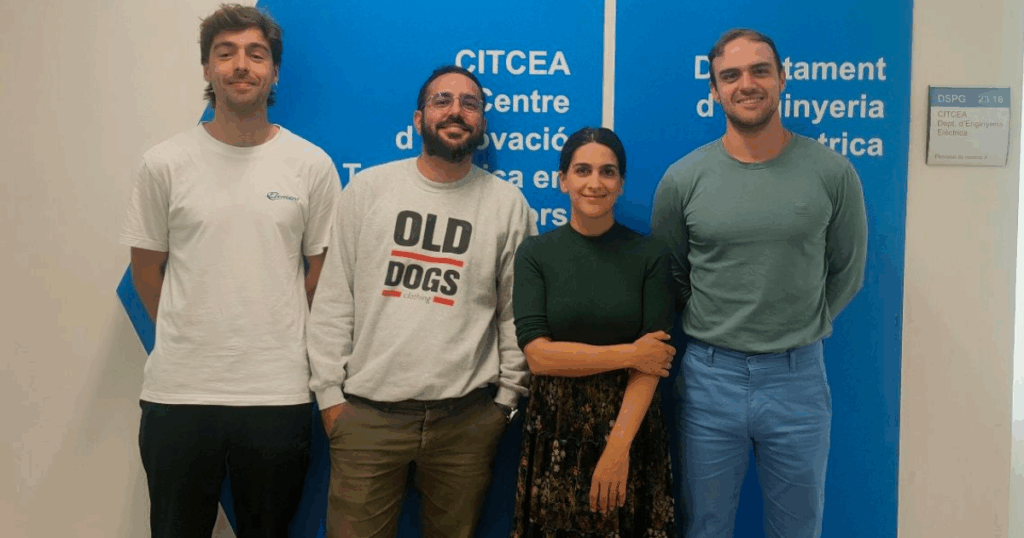
The Universitat Politècnica de Catalunya (UPC), a leading public university in Spain specializing in engineering and science, is playing a pivotal role in the European project ODEON. Through the efforts of two of its research groups, CRAAX and CITCEA-UPC, the university is helping drive the digital transformation of Europe’s energy sector.
Orchestrating Data and Measuring Impact
As part of ODEON’s mission to modernize the grid through artificial intelligence and digital solutions, UPC is spearheading the development of DataOps Orchestration Mechanisms. This work includes characterizing IT infrastructure, defining system performance metrics, and orchestrating data operations across ODEON’s federated architecture. The goal is to enable seamless, efficient, and scalable data workflows to support smart energy services.
In addition, UPC leads the project’s Evaluation and Impact Assessment. The university is designing a robust framework for validating outcomes, setting performance targets, and measuring progress using quantified Key Performance Indicators (KPIs), ensuring that the project delivers measurable benefits to the energy ecosystem.
Building a Marketplace for AI in Energy
One of the most forward-looking contributions from UPC is its role in developing a shared marketplace for AI models, datasets, and services tailored to the electrical energy sector. This marketplace is designed to accelerate the deployment of reusable, interoperable AI solutions that support intelligent, data-driven decision-making.
Among the AI tools under development are forecasting models that predict future energy values, enabling stakeholders to better anticipate demand, optimize grid operations, and enhance planning capabilities.
By democratizing access to high-quality AI models, the marketplace supports Europe’s dual green and digital transitions, a core goal of the ODEON project.
Empowering Prosumers with Smarter Energy Use
Looking ahead to the future of decentralized energy systems, CITCEA-UPC is also developing advanced Home Energy Management Systems (HEMS) that empower prosumers — households and businesses that both produce and consume energy — to manage their energy use more effectively.
These next-generation HEMS leverage mathematical optimization models to help users:
- Shift electricity consumption to periods with lower energy prices
- Increase self-consumption of renewable energy
- Improve energy independence
- Reduce carbon emissions
By analyzing user behavior and real-time energy data, the CITCEA-UPC HEMS system suggests optimized consumption patterns that align with grid needs and market signals. This not only delivers economic savings but also helps households play a direct role in the energy transition.